
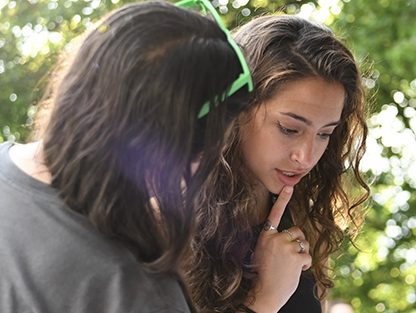
In this six-part series, Youth Mental Health First Aid facilitator Karyn Munro shares what almost 30 years of working with young people has taught her about noticing distress, starting supportive conversations and building a wider circle of trusted adults around rangatahi. The series leads into Path Wānaka’s two-day Youth Mental Health First Aid course on 17 and 24 November 2026.
Duty of care belongs to all of us
When a young person is struggling, it is easy to assume that helping them is the responsibility of their parents, school counsellor or a mental-health professional.
Karyn Munro sees it differently – supporting rangatahi is a shared responsibility, and every adult has a role to play.
During her years as a school guidance counsellor, Karyn saw how often young people connected with the “natural helpers” around them. Sometimes it was a teacher or dean. At other times, it was the caretaker, librarian, canteen worker or person at the front desk.
The same is true outside school. A young person might turn to a coach, employer, neighbour, friend’s parent, auntie, uncle or grandparent. They may be afraid of disappointing their parents, getting into trouble or simply not being understood.
What matters most is not an adult’s job title. It is whether the young person experiences them as genuine, available and safe.
That does not mean an adult must have all the answers or become the young person’s counsellor. A mental health first aider’s role is to recognise possible signs of distress, listen without judgement and help the young person connect with appropriate support.
Karyn describes the choice facing adults simply: “You do something or you do nothing.” For her, doing nothing is not an option.
Doing something might mean gently naming a change you have noticed. It could mean listening, checking in again or sharing a concern with someone better placed to help. If the situation involves immediate safety concerns or is escalating into a crisis, professional support must be involved.
Many adults worry that they are unqualified or might say the wrong thing. Karyn’s message is reassuring: caring adults already have an important role. With a clear framework and some practical skills, they can approach these conversations with greater confidence.
Karyn will facilitate Path Wānaka’s two-day Youth Mental Health First Aid course on 17 and 24 November 2026. The course is for any adult who interacts with young people and wants wants the skills, knowledge and confidence to notice, listen and respond.
Find out more and register for the course.